
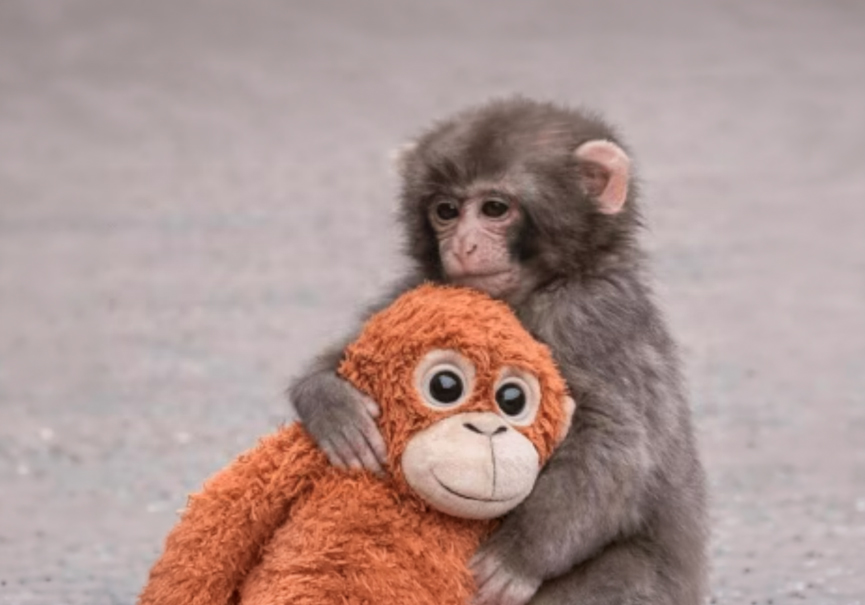
Many of us (actually millions) have been watching Punch — the baby Japanese Macaque born at the Ichikawa City Zoo in Japan. Not long after he arrived, his mother rejected him. For a tiny snow monkey, that’s more than sad. Babies that young are meant to cling to their mothers for warmth, safety, and comfort.
Punch didn’t have that.
His caretakers stepped in to keep him safe. But they also noticed something else. He seemed lonely. Restless. Searching.
So, they gave him a big plush toy to hold.
That was it. A soft thing to cling to.
And he wrapped himself around it.
He carries it. Cuddles it. Presses his little face into it.
It wasn’t complicated. It wasn’t clinical. It was compassion. Punch didn’t say, “I’m struggling.” He couldn’t. He showed it.
And someone paid attention.
That’s the part that stays with me.
So often, people around us won’t come out and say, “I’m not okay.” Instead, it shows up in quieter ways — pulling back, snapping more than usual, seeming tired all the time, going silent.
Behavior is often the language.
If we slow down enough to see it, we can respond with compassion instead of judgment.
What’s been striking is how the world reacted to Punch. People everywhere felt protective of him. Tender toward him. Rooting for him. It reminds us that, deep down, we understand the need for comfort.
Sometimes care starts with something as simple as a plushie. A check-in. A softer tone.
A steady presence.
And sometimes it means stepping in when something isn’t right.
Punch reminds us that vulnerability isn’t weakness. It’s a signal. And compassion doesn’t have to be dramatic to matter — but it does require action.
He showed what he needed. Someone noticed. And they responded.
Let’s keep noticing.
Let’s keep responding.
Let’s keep choosing care.
Because sometimes, the smallest act of compassion changes everything.